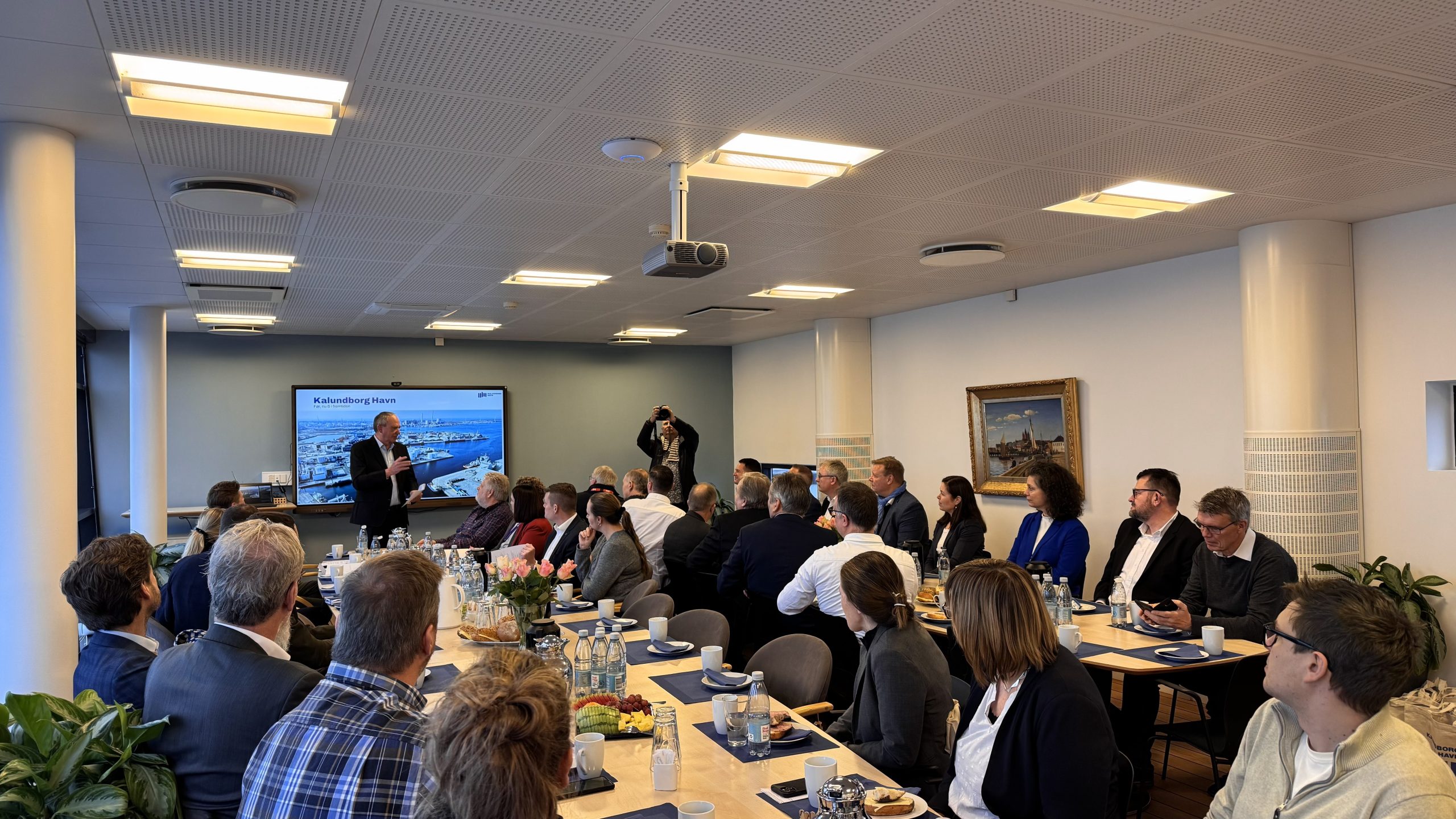
When the Danish Parliament's Transport Committee visited the Port of Kalundborg on Monday, January 12, politicians, businesses and stakeholders turned out in large numbers to support the agenda: the need for a modern land infrastructure that can support the area's rapid development.
The Transport Committee was on a tour of West Zealand to hear more about the need for the Zealand Interstate Motorway – Route 22, and the first stop was Kalundborg Port, where the message was delivered clearly: The potential is great, but it requires that the infrastructure follow suit.
Infrastructure is crucial for the port's development
Port Director Bent Rasmussen welcomed the many attendees and gave them an insight into the history, business and future plans of the Port of Kalundborg. It became clear that optimal land infrastructure is a prerequisite for realizing the port's full potential. The port's development is not a desk project - it is happening here and now - and it is closely linked to how people can get to and from Kalundborg.
For the port, the land infrastructure to the east is well underway with the Kalundborg Motorway. However, to the south, a crucial link is still missing that can connect Kalundborg closer to the rest of Zealand, the Great Belt and the upcoming Fehmarnbelt connection.
From the perspective of the Port of Kalundborg, the cross-motorway is mainly about creating more coherence, more safety and more sustainability in everyday life.
In short, the Port of Kalundborg points out that the cross-motorway will:
- make heavy transport more efficient and less stressful
- reduce the climate footprint through smoother driving and fewer braking
- relieve the local roads
- strengthen mobility for citizens, commuters and businesses and support Kalundborg's role as a logistics and industrial hub
Traffic in and around Kalundborg is already increasing – and it will continue to grow in line with industrial development, new activities and population growth. Therefore, the point is simple: Infrastructure is a prerequisite for the development of the Kalundborg region.
Container logistics, time & green solutions
After that, Mikael Gutman, CEO of APM Terminals Nordics, took over and spoke about the container terminal's everyday life and future. From Kalundborg, the terminal serves many large customers on Zealand - and time is a decisive factor here.
Waiting time is expensive, he explained. For an airplane, it is not the time in the air, but the time on the ground that costs, and for a container, it is the time waiting in a queue that costs. Therefore, a continuous motorway connection plays a central role if transport chains are to function efficiently and greener.
Kalundborg has a strong position from the sea, and initiatives such as Zealand's Green Gateway make container transport more sustainable. But the green ambitions cannot stand alone. Land transport must keep up – otherwise the whole loses its power.
Harbor tour & local perspectives
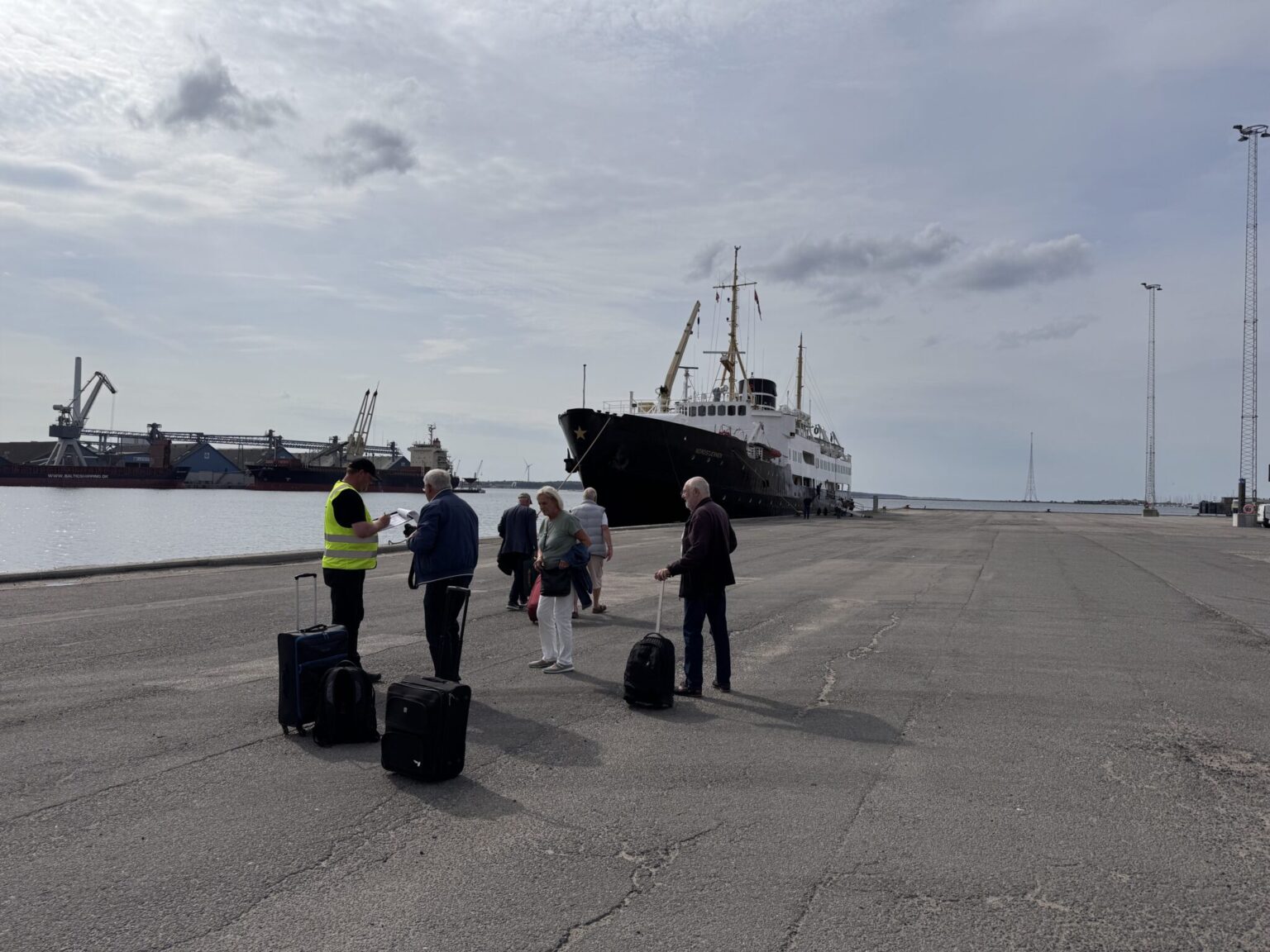
The visit was rounded off with a tour of the port. Here, the Transport Committee had the opportunity to see with their own eyes how a busy commercial port functions in practice. From industry and containers to bulk and logistics, it became clear how dependent everyday life is on the smooth movement of goods, materials and people to and from the area.
The large quantities of goods that are already handled in Kalundborg were also discussed – including road salt, which is in season. The winter weather has meant that up to 5,000 tons per day have been loaded onto trucks for further transport into the country.
The tour provided a down-to-earth picture of how good infrastructure is not just about visions of the future, but about making everyday life coherent.
A common cause with great societal benefits
The visit to Kalundborg Port showed that the desire for a trans-Sealland motorway extends far beyond the municipal borders. It is about coherence, competitiveness and responsible development.
For the Port of Kalundborg, the visit was an important step in the dialogue about the infrastructure of the future – and a hopeful sign that local experiences and national decisions can meet when Denmark's transport system is to be shaped for the future.